Reimagining reading.
Casa del Libro E-Commerce Redesign.
Reimagining reading.
Casa del Libro E-Commerce
Redesign.
Reimagining
reading. Casa del Libro E-Commerce
Redesign.
Fields
Product Design
E-Commerce
Industry
Cultural Retail
Bookselling
Date
February 25'
Role
Design Lead
Product Designer
Studio
Garaje de Ideas
A culture institution
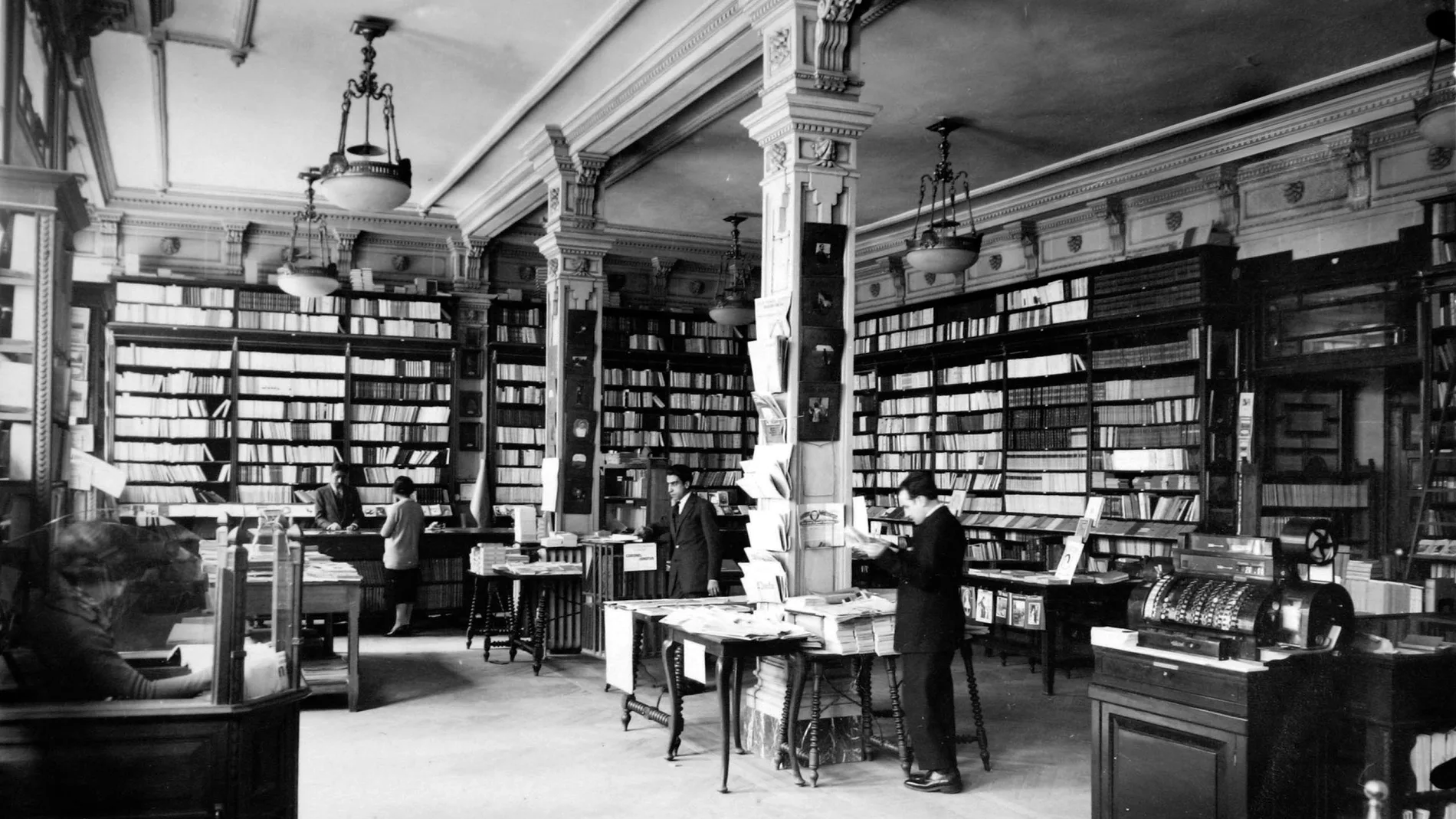
Casa del Libro is one of the leading bookstore chains in Spain and one of the most recognized brands in the Spanish-speaking book market. Founded in 1923 in Madrid, the company has built a strong relationship over the past century with readers, publishers, and authors, combining an extensive network of physical bookstores with one of the country’s most relevant online book retail platforms.
Over time, Casa del Libro has established itself not only as a place to purchase books, but also as a cultural institution for literary discovery.
The new home
for readers
In a context of evolving e-commerce and changing cultural consumption habits, the company decided to redesign its website to better adapt to the expectations of contemporary readers following these main objectives: Clear, efficient, and conversion-oriented navigation, elevating the e-commerce experience. Modernize the platform’s visual identity, strengthen the sense of community and boost reader loyalty.
The redesign involved addressing a deeper challenge: reconciling the cultural legacy of a historic bookshop brand with the demands of a modern digital platform. Casa del Libro has decades of traditionally conservative mindset, while the digital landscape demands experimentation and boldness.

Ecosystem diagnosis
To understand the context, we analysed how different platforms approach content discovery, catalogue exploration and the mechanisms that influence purchasing decisions.
The analysis focused on two dimensions: purchase experience, and community ecosystems, we also explored the cultural impact of BookTok, the reading community within TikTok, analysing how short-pills video and reader reactions drive new forms of sharing.
This exercise helped us to identify interaction patterns, discovery models and trust mechanisms that today shape how readers find and choose what to read.


A shared language
As the strategic foundation, the design team facilitated a collaborative workshop with business direction, technology, content and design teams, structured across two four-hour sessions over two days.
Through guided questioning, divergent co-creation, empathy mapping and effort/impact prioritization, the teams worked together to identify pain points, opportunities and the emotional register the new platform should carry.
The outcome: a strategic document that became the operating reference for the redesign; but still more important, a shared language across teams, which in brands with cultural weight is often the real prerequisite for change.
Building the voice
The new visual language translated the workshop's strategy into a coherent system. A modular foundation to scale across every surface, softer components to bring the reader closer, color used as function, a simplified typographic voice, and video as a dynamic bridge between authors, booktokers and the cultural conversation around them.


Closer to the authors
The core of the product page redesign was information re-organization, restructuring the content into a clearer, more compact layout and integrating previously tested conversion micro-strategies that make the path to purchase effortless.
We also introduced author modules to connect readers with the people behind the stories, and event modules from the physical bookstores for turning each page into a bridge between reading and belonging to a wider community.


One place for every reader
To begin building a sense of community, we set small and intentional goals, starting with a new user role within the platform: "the super reader". A status earned by those who actively log their reading, share reviews and contribute to the cultural conversation around books.
Alongside, a new space was created within the reader's private area, "Mi Rincón de Lectura" where every book read becomes part of a personal library, a quiet record of one's own reading life where other readers can share their literary tastes. A set of modules was also included across the narrative to drive social recommendation.


Translation,
not reinvention
This redesign was a negotiation exercise between two forces that rarely coexist without tension: the will to innovate and the weight of an enormous cultural legacy. How to modernize without betraying, how to bring this brand closer to the present without erasing what made it matter.

Keep
exploring
Other projects
Other projects
Boost. IFEMA Madrid
Design System

Boost. IFEMA Madrid
Design System
Boost. IFEMA Madrid
Design System
Tagoro Dive
Brand Identity

Tagoro Dive
Brand Identity
Tagoro Dive
Brand Identity
Fields
E-Commerce
Product Design
Industry
Cultural retail
Bookselling
Date
June 25'
Role
Design Lead
Product Designer
Studio
Garaje de Ideas
A culture institution
Casa del Libro is one of the leading bookstore chains in Spain and one of the most recognized brands in the Spanish-speaking book market. Founded in 1923 in Madrid, the company has built a strong relationship over the past century with readers, publishers, and authors, combining an extensive network of physical bookstores with one of the country’s most relevant online book retail platforms.
Over time, Casa del Libro has established itself not only as a place to purchase books, but also as a cultural institution for literary discovery.
The new home for readers
In a context of evolving e-commerce and changing cultural consumption habits, the company decided to redesign its website to better adapt to the expectations of contemporary readers following these main objectives: Clear, efficient, and conversion-oriented navigation, elevating the e-commerce experience. Modernize the platform’s visual identity, strengthen the sense of community and boost reader loyalty.
The redesign involved addressing a deeper challenge: reconciling the cultural legacy of a historic bookshop brand with the demands of a modern digital platform. Casa del Libro has decades of traditionally conservative mindset, while the digital landscape demands experimentation and boldness.
Ecosystem diagnosis
To understand the context, we analysed how different platforms approach content discovery, catalogue exploration and the mechanisms that influence purchasing decisions.
The analysis focused on two dimensions: purchase experience, and community ecosystems, we also explored the cultural impact of BookTok, the reading community within TikTok, analysing how short-pills video and reader reactions drive new forms of sharing.
This exercise helped us to identify interaction patterns, discovery models and trust mechanisms that today shape how readers find and choose what to read.
A shared language
As the strategic foundation, the design team facilitated a collaborative workshop with business direction, technology, content and design teams, structured across two four-hour sessions over two days.
Through guided questioning, divergent co-creation, empathy mapping and effort/impact prioritization, the teams worked together to identify pain points, opportunities and the emotional register the new platform should carry.
The outcome: a strategic document that became the operating reference for the redesign; but still more important, a shared language across teams, which in brands with cultural weight is often the real prerequisite for change.
Building the voice
The new visual language translated the workshop's strategy into a coherent system. A modular foundation to scale across every surface, softer components to bring the reader closer, color used as function, a simplified typographic voice, and video as a dynamic bridge between authors, booktokers and the cultural conversation around them.
Closer to the authors
The core of the product page redesign was information re-organization, restructuring the content into a clearer, more compact layout and integrating previously tested conversion micro-strategies that make the path to purchase effortless.
We also introduced author modules to connect readers with the people behind the stories, and event modules from the physical bookstores for turning each page into a bridge between reading and belonging to a wider community.
One place for every reader
To begin building a sense of community, we set small and intentional goals, starting with a new user role within the platform: "the super reader". A status earned by those who actively log their reading, share reviews and contribute to the cultural conversation around books.
Alongside, a new space was created within the reader's private area, "Mi Rincón de Lectura" where every book read becomes part of a personal library, a quiet record of one's own reading life where other readers can share their literary tastes. A set of modules was also included across the narrative to drive social recommendation.
Translation, not reinvention
This redesign was a negotiation exercise between two forces that rarely coexist without tension: the will to innovate and the weight of an enormous cultural legacy. How to modernize without betraying, how to bring this brand closer to the present without erasing what made it matter.
Fields
E-Commerce
Product Design
Industry
Cultural retail
Bookselling
Date
June 25'
Role
Design Lead
Product Designer
Studio
Garaje de Ideas
A culture institution
Casa del Libro is one of the leading bookstore chains in Spain and one of the most recognized brands in the Spanish-speaking book market. Founded in 1923 in Madrid, the company has built a strong relationship over the past century with readers, publishers, and authors, combining an extensive network of physical bookstores with one of the country’s most relevant online book retail platforms.
Over time, Casa del Libro has established itself not only as a place to purchase books, but also as a cultural institution for literary discovery.
The new home for readers
In a context of evolving e-commerce and changing cultural consumption habits, the company decided to redesign its website to better adapt to the expectations of contemporary readers following these main objectives: Clear, efficient, and conversion-oriented navigation, elevating the e-commerce experience. Modernize the platform’s visual identity, strengthen the sense of community and boost reader loyalty.
The redesign involved addressing a deeper challenge: reconciling the cultural legacy of a historic bookshop brand with the demands of a modern digital platform. Casa del Libro has decades of traditionally conservative mindset, while the digital landscape demands experimentation and boldness.
Ecosystem diagnosis
To understand the context, we analysed how different platforms approach content discovery, catalogue exploration and the mechanisms that influence purchasing decisions.
The analysis focused on two dimensions: purchase experience, and community ecosystems, we also explored the cultural impact of BookTok, the reading community within TikTok, analysing how short-pills video and reader reactions drive new forms of sharing.
This exercise helped us to identify interaction patterns, discovery models and trust mechanisms that today shape how readers find and choose what to read.
A shared language
As the strategic foundation, the design team facilitated a collaborative workshop with business direction, technology, content and design teams, structured across two four-hour sessions over two days.
Through guided questioning, divergent co-creation, empathy mapping and effort/impact prioritization, the teams worked together to identify pain points, opportunities and the emotional register the new platform should carry.
The outcome: a strategic document that became the operating reference for the redesign; but still more important, a shared language across teams, which in brands with cultural weight is often the real prerequisite for change.
Building the voice
The new visual language translated the workshop's strategy into a coherent system. A modular foundation to scale across every surface, softer components to bring the reader closer, color used as function, a simplified typographic voice, and video as a dynamic bridge between authors, booktokers and the cultural conversation around them.
Closer to the authors
The core of the product page redesign was information re-organization, restructuring the content into a clearer, more compact layout and integrating previously tested conversion micro-strategies that make the path to purchase effortless.
We also introduced author modules to connect readers with the people behind the stories, and event modules from the physical bookstores for turning each page into a bridge between reading and belonging to a wider community.
One place for every reader
To begin building a sense of community, we set small and intentional goals, starting with a new user role within the platform: "the super reader". A status earned by those who actively log their reading, share reviews and contribute to the cultural conversation around books.
Alongside, a new space was created within the reader's private area, "Mi Rincón de Lectura" where every book read becomes part of a personal library, a quiet record of one's own reading life where other readers can share their literary tastes. A set of modules was also included across the narrative to drive social recommendation.
Translation, not reinvention
This redesign was a negotiation exercise between two forces that rarely coexist without tension: the will to innovate and the weight of an enormous cultural legacy. How to modernize without betraying, how to bring this brand closer to the present without erasing what made it matter.
Curious?
Location
Jaime Lucero
Creative Designer
Multidisciplinary Photographer
Reach me at:
jaime.luceromarcos@gmail.com +34 646 13 44 86
Currently:
Based in Madrid
Open from:
Monday to Friday
9 AM to 17 PM
Design & Build
2026
Curious?
Creative Designer
Multidisciplinary Photographer
Jaime Lucero
Reach me at:
jaime.luceromarcos@gmail.com +34 646 13 44 86
Location
Currently:
Based in Madrid
Open from:
Monday to Friday
9 AM to 17 PM
Design & Build
2026
Curious?
Location
Jaime Lucero
Creative Designer
Multidisciplinary Photographer
Reach me at:
jaime.luceromarcos@gmail.com
+34 646 13 44 86
Currently:
Based in Madrid
Open from:
Monday to Friday
9 AM to 17 PM